Some Easy Ways To Incorporate Physical Activity In your Daily Busy Schedule

exercise 1

Doing regular exercise, or keeping your body physically active is a great help for leading a healthy lifestyle.

The Big Problem Is …..Not Having Enough Time To exercise.

But, does it have to be that way, or there are ways to incorporate exercise even if you are a busy person? Well, there are certain ways you can incorporate exercise effortlessly into your daily life without spoiling your schedule.

There’s a good reason to make exercise as a part of your life as it will not  just make you physically fit but also lead to feeling better and light, looking good as you can lose weight doing regular workout, and of-course very important- Reduce the Stress.

So, challenge yourself to try out my below suggestions .

morning exWake-up a bit Early: Choosing an exercise in the morning  can be a struggle, but extremely beneficial. Starting a day with a workout can help you stay on track with nutrition. Try to wake-up 15 minutes early from your regular time for first one week and try to utilize that time for some stretching exercises. The next week wake-up 30 minutes early and you can do some stretching and walking or jogging. If you are successful for the first week, then it is easy to incorporate in your daily routine.

lunch exExercise During Lunch Hour At Office: If you get an hour for lunch, then give the first 30 minutes for your physical activity. Find some place like a park or a beautiful surrounding near your work place, so that you can utilize the 30 minutes over there just walking around which will even reduce your stress in between your work time. The next 30 minutes of-course can spend for chatting, gossiping and having food with colleagues.
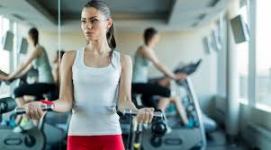
evening exEvening Time Workout: This time suits many people who are lazy to wake-up early. An evening walk or gym for 45 minutes to one hour can be done after your work timing. Its a good time even to relax and to reduce the whole day work stress.


But Remember Not To Do Any Exercise On A Full Stomach!

The other ways you can still make yourself active are,

climbing stairs

  • Take stairs instead of lift wherever you go.

 

play with kids

  • During weekends or evening times, take your kids to the nearby park or ground and have fun with some games like football, shuttle, badminton, running, playing etc.,

 

car wash

  • If you are working at home or during your weekend off, do an active home routine like gardening, car washing etc., Its fun to involve your kids too. While doing these you are exercising even if many people don’t consider it as an exercise.

 

walking with baby

  • For women with babies, can take a walk in a neighborhood park with their baby in a stroller or can consider walking with the family which gives a great bonding.
  • People who sit for a long time at work place can consider to get up and walk around for few minutes in between their work.

Fitting fitness into a busy schedule is hard and exercise is the first thing to get scratched from the calendar. But with a little forethought and planning, its doable.

Stay Active For A Healthy Lifestyle. 

World Breastfeeding Week

logo

World Breastfeeding Week                                                                                          1-7 August 2016            

Breastfeeding: A key to
Sustainable Development

 The World Breastfeeding Week 2016 theme is about how breastfeeding is a key element in getting us to think about how to value our well being from the start of life, how to respect each other and care for the world we share.

Breastfeeding decreases the risk of a number of diseases in both mothers and babies.

Health Effects of Breast Milk

Breast milk contains several anti-infective factors such as bile salt stimulated lipase (protecting against amoebic infections) and lactoferrin (which binds to iron and inhibits the growth of intestinal bacteria).

Infants who are exclusively breastfed for the first six months are less likely to die of gastrointestinal infections than infants who switched from exclusive to partial breastfeeding at three to four months.

During breastfeeding, approximately 0.25–0.5 grams per day of secretory IgA antibodies pass to the baby via milk. This is one of the important features of colostrum. The main target for these antibodies are probably microorganisms in the baby’s intestine. The rest of the body displays some uptake of IgA, but this amount is relatively small.

Maternal vaccinations while breastfeeding is safe for almost all vaccines. Additionally, the mother’s immunity obtained by vaccination against tetanus, diphtheria, whooping cough and influenza can protect the baby from these diseases, and breastfeeding can reduce fever rate after infant immunization. However, smallpox and yellow fever vaccines increase the risk of infants developing vaccinia and encephalitis.

Breastfeeding aids maternal physical and emotional health. Breastfeeding and depression in the mother are associated. Mothers who successfully breastfeed are less likely to develop postpartum depression.

Hormones released during breastfeeding help to strengthen the maternal bond. Support for a breastfeeding mother can strengthen familial bonds and help build a paternal bond.

Recommendations By World Organizations 

WHO’s guidelines recommend “continue frequent, on-demand breastfeeding until two years of age or beyond.”

The European Commission, the US Centers for Disease Control and Prevention (CDC), UNICEF, AAP, Save The Children and the UK National Health Service (NHS), Australian Department of Health, Health Canada, Canadian Paediatric Society, Dietitians of Canada, and Breastfeeding Committee for Canada, recommend exclusive breastfeeding for six months following birth and continued nursing for an additional eighteen months or more. Save the Children states, “Six months of exclusive breastfeeding increases a child’s chance of survival at least six-fold.”

Physical Activity Reduces Stress

physicalactivity1

The physical benefits of exercise—improving physical condition and fighting disease—have long been established, and physicians always encourage staying physically active. Exercise is also considered vital for maintaining mental fitness, and it can reduce stress. Studies show that it is very effective at reducing fatigue, improving alertness and concentration, and at enhancing overall cognitive function. This can be especially helpful when stress has depleted your energy or ability to concentrate.

When stress affects the brain, with its many nerve connections, the rest of the body feels the impact as well. So it stands to reason that if your body feels better, so does your mind. Exercise and other physical activity produce endorphins—chemicals in the brain that act as natural painkillers—and also improve the ability to sleep, which in turn reduces stress. Meditation, acupuncture, massage therapy, even breathing deeply can cause your body to produce endorphins. And conventional wisdom holds that a workout of low to moderate intensity makes you feel energized and healthy.

Scientists have found that regular participation in aerobic exercise has been shown to decrease overall levels of tension, elevate and stabilize mood, improve sleep, and improve self-esteem. Even five minutes of aerobic exercise can stimulate anti-anxiety effects.

Among some of its additional benefits, exercise can help:

  • strengthen your muscles and bones
  • strengthen your immunity, which can decrease your risk of illness and infection
  • lower your blood pressure, sometimes as much as some antihypertensive medications
  • boost levels of good cholesterol in your blood
  • improve your blood circulation
  • improve your ability to control weight
  • help you sleep better at night
  • boost your energy
  • improve your self-image

HEALTHY FOOD CHOICES WHILE DINING OUT

dine out 1

Many of us in today’s busy lifestyle dine out. Making a healthy food choice while dining out is very important to your health and weight management. Fortunately, we have restaurants now which offers healthy food choices. Most of them give more options for portion size, preparation methods and food items.

Some healthy choices you can make in a restaurant are,

  • The first thing you could do is to order for a colorful salad before you could eat anything. Having the salads first will bit fill your stomach and will make you to eat less of other high calorie foods. So your caloric intake could be reduced.
  • Opt for the food which is boiled, steamed, vegetables instead of fried ones.
  • When you go for non-vegetarian foods, choose boiled, grilled, tandoori foods instead of deep fried ones.
  • Avoid red meat instead go for fish and chicken.
  • Choose a main course that is not made of refined foods like maida. Instead go for whole grain/ unrefined foods.
  • Keep an eye on your portion size as it is very important for your weight management.
  • Opt for fruits or fruit salads instead of going for high calorie sweets.
  • Go for fruit juices without sugar in the place of carbonated beverages.
  • If its for a dinner out then try to finish as early as possible,like before 8.

So with a little planning you can make a healthier choice for eating out without missing your weekend get-togethers and parties.

HAPPY AND HEALTHY DINE-OUT!


First blog post

Hai I am Dhanalakshmi and I have started this blog to give public the awarness about healthy food habits and the kinds of dangerous foods we consume now a days.

I am also keen to tell people to not to forget the traditional food habits which were healthy when compared to now.